30 Days to Your First Paid Voice-Over Job
Follow this proven 30-day roadmap to build your voice-over skills, create your first demo, submit auditions, and increase your chances of landing your first paid voice-over job.
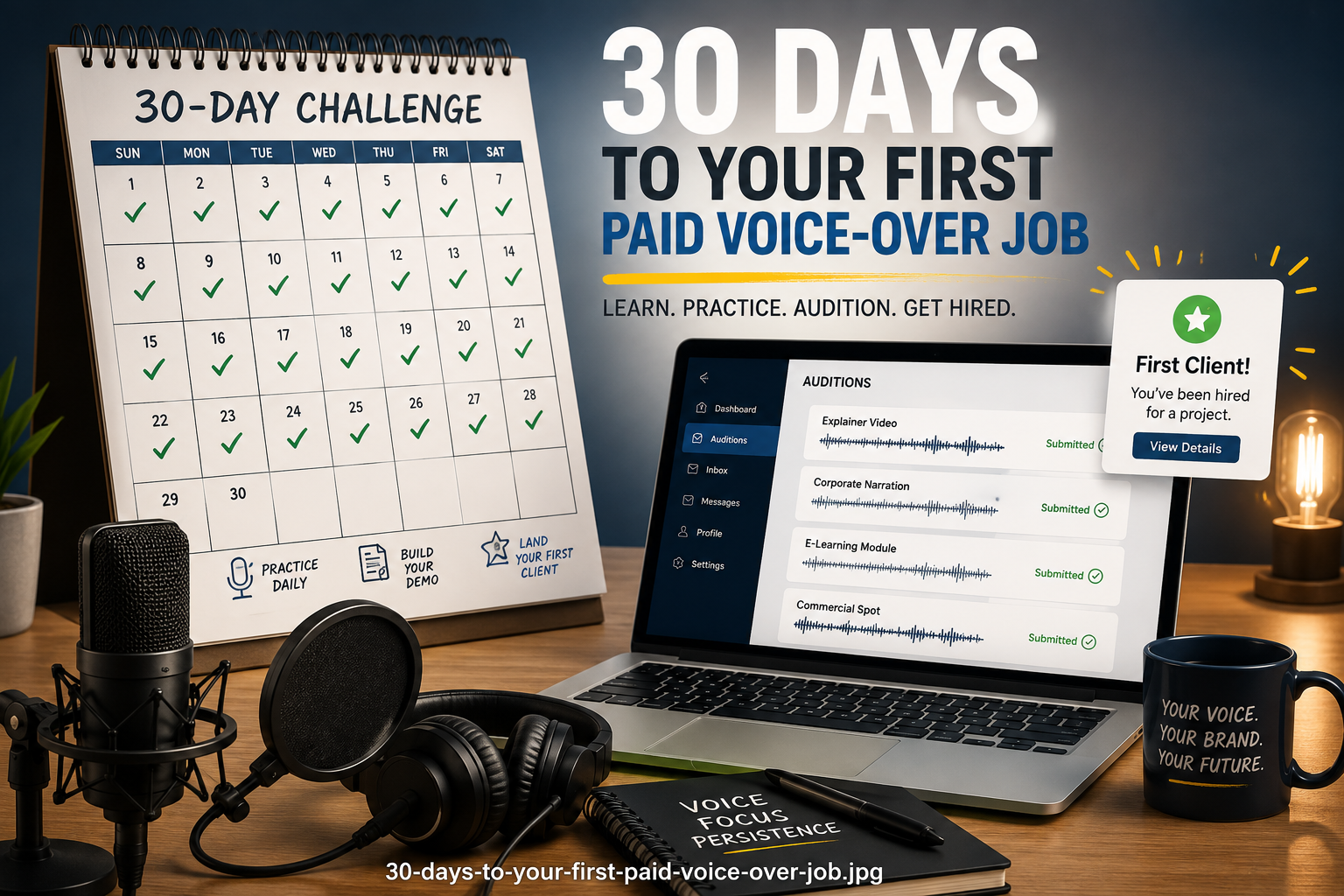
30 Days to Your First Paid Voice-Over Job
You recorded your first few voice-over samples. Friends told you that you have a great voice. You even bought a decent microphone.
But weeks—or months—later, you’re still waiting for your first paying client.
The truth is, most beginners don’t fail because they lack talent. They fail because they don’t have a plan. They practice randomly, submit a handful of auditions, get rejected, and assume the industry isn’t for them.
It doesn’t have to be that way.
This 30-day roadmap gives you a practical, beginner-friendly challenge that takes you from setting up your workspace to submitting auditions and landing your first paid voice-over job. Follow it consistently, and by the end of the month, you’ll have the skills, confidence, and momentum to start building a real voice-over career.
Can You Really Get a Paid Voice-Over Job in 30 Days?
The short answer is yes—but not by chasing perfection.
Many beginners imagine they need years of experience, an expensive studio, or a naturally “radio-perfect” voice. None of those are prerequisites for landing an entry-level project.
What matters most is:
- Practicing every day
- Improving one skill at a time
- Submitting auditions consistently
- Learning from every rejection
Your goal isn’t to become a world-class voice actor in 30 days.
Your goal is to become good enough for someone to pay you for your first project.
What Determines Your Success?
Several factors influence how quickly you’ll book your first client.
- Your recording quality
- Your consistency
- The number of auditions you submit
- Your willingness to improve after feedback
Consistency beats talent that never takes action.
What This Challenge Assumes
This roadmap is designed for complete beginners who have:
- A basic USB microphone
- A quiet recording space
- A computer or laptop
- Free audio editing software such as Audacity
- About 30–60 minutes per day
If that’s you, you’re ready to begin.
Before Day 1: Prepare Your Voice-Over Toolkit
Before recording your first script, spend one day setting yourself up for success.
Essential Equipment
You don’t need a professional studio.
Start with:
- A quality USB microphone
- Closed-back headphones
- A pop filter
- Audacity or another free recording editor
- A microphone stand
Your recording environment matters more than owning expensive gear.
Create a Simple Home Recording Space
Background noise can ruin an otherwise excellent performance.
Use simple sound treatment such as:
- Thick blankets
- Curtains
- Rugs
- Closet recording setups
- Foam panels (optional)
Aim for clean, quiet audio, not perfection.
Set Your Daily Schedule
Choose one consistent practice time every day.
For example:
- 7:30–8:00 AM
- Lunch break
- After work
Small daily sessions outperform occasional marathon practice.
Week 1 (Days 1–7): Build Your Foundation
This week is all about developing good habits.
Don’t worry about finding clients yet.
Focus on becoming comfortable behind the microphone.
Daily Vocal Warm-Ups
Spend 10 minutes warming up before every session.
Include:
- Lip trills
- Tongue twisters
- Breathing exercises
- Pitch variation
- Articulation drills
Your voice is your instrument.
Treat it that way.
Improve Reading and Delivery
Choose short scripts from commercials, documentaries, podcasts, or explainer videos.
Record yourself reading each script several times.
Experiment with:
- Different pacing
- Emotional delivery
- Energy levels
- Character interpretation
The first take is rarely your best.
Learn Basic Audio Editing
You don’t need advanced production skills.
Master these basics:
- Noise reduction
- Trimming silence
- Volume normalization
- Removing mouth clicks
- Exporting MP3 and WAV files
Clean audio immediately makes you sound more professional.
Record Your First Practice Scripts
Record at least one new script every day.
Listen critically afterward.
Ask yourself:
- Was I speaking naturally?
- Did I sound confident?
- Were there distracting noises?
- Did I rush any sentences?
Improvement begins with honest self-review.
Week 1 Milestone
By Day 7 you should have:
- 7 practice recordings
- Better microphone technique
- Greater speaking confidence
- Basic editing skills
Week 2 (Days 8–14): Create Your First Demo
Your demo is your voice-over résumé.
It doesn’t need to be perfect.
It simply needs to demonstrate your range and recording quality.
What Makes a Good Beginner Demo?
Keep it short.
Aim for 45–90 seconds.
Include several styles such as:
- Commercial
- Corporate narration
- E-learning
- Explainer video
- Friendly conversational read
Keep each clip between 8 and 15 seconds.
Choose Strong Practice Scripts
Don’t randomly copy advertisements.
Instead, create original practice scripts inspired by different industries.
Examples include:
- Coffee shops
- Fitness apps
- Online learning
- Travel companies
- Technology products
This helps showcase versatility while avoiding copyright concerns.
Edit for Clean Audio
Your demo should sound polished.
Remove:
- Long pauses
- Background noise
- Breathing distractions
- Uneven volume
Clients notice audio quality before they notice vocal talent.
Ask for Feedback
Share your demo with:
- Voice-over communities
- Friends with media experience
- Online forums
- Mentors
Ask specific questions like:
- Which section sounds strongest?
- Where do I sound unnatural?
- Is the pacing engaging?
Constructive criticism accelerates growth.
Week 2 Milestone
By Day 14 you should have:
- One polished beginner demo
- Feedback from at least three people
- A clear understanding of your strengths
Week 3 (Days 15–21): Start Auditioning
Now it’s time to enter the marketplace.
Many beginners wait too long before auditioning.
Don’t.
Real clients provide the best education.
Beginner-Friendly Voice-Over Marketplaces
Start with platforms that welcome newcomers.
Consider:
- Fiverr
- Upwork
- Freelancer
- Voices.com
- Voice123
- ACX
- Casting Call Club
Don’t rely on just one platform.
Diversify your opportunities.
Create a Professional Profile
Your profile should include:
- A friendly professional photo
- A concise introduction
- Your beginner demo
- Equipment list
- Delivery times
- Languages and accents offered
Clients want confidence—not exaggeration.
Write Better Audition Proposals
Keep proposals short.
Include:
- A personalized greeting
- A sentence showing you understand the project
- Why you’re a good fit
- Your delivery timeline
- Appreciation for their consideration
Never send identical copy-and-paste proposals.
How Many Auditions Should You Submit?
Treat auditions as daily practice.
Aim for:
- 3–5 auditions per day
- 20–30 during the week
Remember:
Bookings come from volume and continuous improvement.
Week 3 Milestone
By Day 21 you should have:
- Professional marketplace profiles
- 15–30 auditions submitted
- Improved confidence recording under deadlines
Week 4 (Days 22–30): Land Your First Client
This final week focuses on increasing your chances of receiving that first “You’re hired” message.
Improve Your Audition Strategy
Review your previous submissions.
Notice patterns.
Ask yourself:
- Which auditions received replies?
- Which styles felt strongest?
- Where can I improve my delivery?
Small improvements compound quickly.
Start Direct Outreach
Don’t wait for clients to find you.
Reach out to businesses that regularly need voice talent.
Potential clients include:
- Local businesses
- YouTube creators
- Podcast hosts
- E-learning companies
- Video production agencies
- Indie game developers
- Mobile app developers
Introduce yourself professionally.
Share your demo.
Offer to help with future projects.
Follow Up Professionally
If you don’t hear back, don’t disappear.
Send one polite follow-up after about a week.
Keep it short.
Stay respectful.
Professional persistence often pays off.
Deliver Your First Project Like a Professional
Once you book your first client:
- Confirm the requirements.
- Record multiple takes.
- Deliver before the deadline.
- Respond quickly to revision requests.
- Thank the client afterward.
A happy first client often becomes a repeat client.
Week 4 Milestone
By Day 30 you should have:
- 30–50 auditions submitted
- Direct outreach completed
- Valuable marketplace experience
- A strong chance of landing your first paid project—or a growing pipeline of opportunities
Common Mistakes That Delay Your First Voice-Over Job
Avoid these common beginner traps.
Waiting Until Everything Is Perfect
Perfection delays progress.
Start before you feel ready.
Spending Too Much on Equipment
Great performances matter more than expensive microphones.
Upgrade only after you start earning.
Recording in Noisy Spaces
Poor audio quality instantly reduces your credibility.
Always prioritize clean recordings.
Giving Up Too Soon
Many successful voice actors booked their first project only after dozens of auditions.
Rejection is part of the process—not proof you should quit.
Ignoring Client Communication
Fast responses and professionalism often beat slightly better voices.
Clients remember reliability.
Your 30-Day Voice-Over Checklist
Before finishing the challenge, make sure you’ve completed each milestone.
- ✅ Home recording space prepared
- ✅ Daily practice completed
- ✅ Beginner demo created
- ✅ Audio editing basics learned
- ✅ Marketplace profiles published
- ✅ 30–50 auditions submitted
- ✅ Direct outreach sent
- ✅ Feedback collected
- ✅ First client booked—or strong momentum established
If you can check most of these boxes, you’ve made more progress than many aspiring voice actors ever do.
Frequently Asked Questions
Can I really become a voice actor in one month?
You can absolutely build the foundation and begin booking beginner projects.
Long-term success comes from continuing to practice and audition consistently.
Do I need a professional recording studio?
No.
Many successful voice actors started with simple home setups and upgraded over time.
How many auditions should beginners submit?
Aim for at least 30–50 auditions during your first month.
The more quality auditions you submit, the more opportunities you create.
What’s the best platform for beginners?
No single marketplace is perfect.
Experiment with several platforms and focus on the ones where you receive the most responses.
How much can a beginner voice-over artist earn?
Rates vary depending on project type, experience, and client budget.
Rather than chasing high-paying jobs immediately, focus on delivering excellent work, earning positive reviews, and building a portfolio.
Your First Client Starts Today
Every professional voice actor has one thing in common.
At some point, they recorded their very first audition.
Not because they felt completely ready.
Because they decided that progress mattered more than perfection.
If you commit to the next 30 days, you’ll gain valuable skills, build a professional portfolio, and dramatically increase your chances of hearing the words every beginner wants to hear:
“We’d like to hire you.”
The journey starts with a single recording session.
Challenge yourself to complete Day 1 today—and don’t skip a single day for the next 30 days.